Steve Jobs and Saihoji: A Garden Beyond a Single View
Steve Jobs returned repeatedly to Saihoji, Kyoto’s Moss Temple. Its quiet comes not from emptiness, but from the way moss, water, stone, trees, centuries of change, and daily care form a coherent whole.
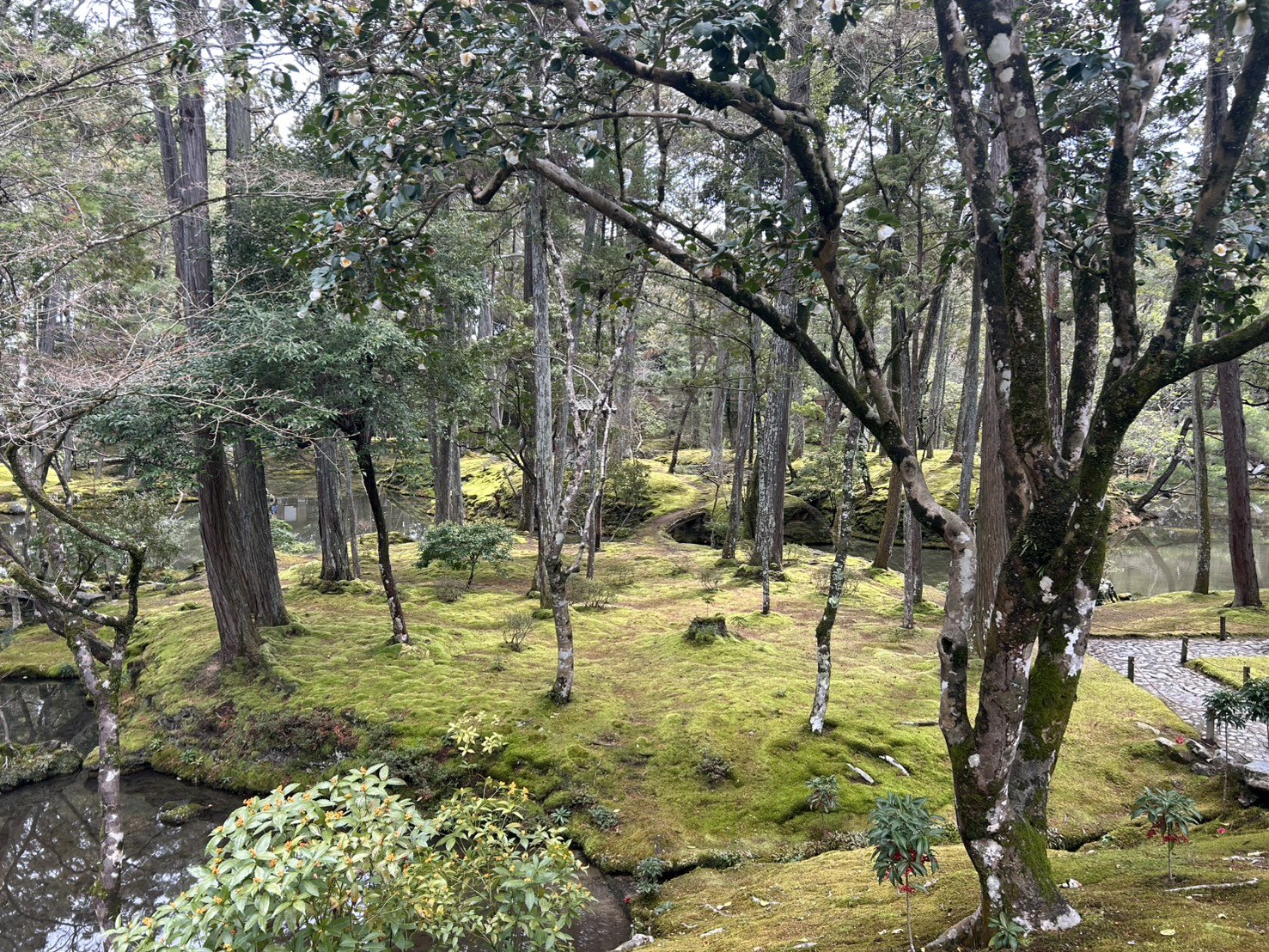
Steve Jobs had a longstanding interest in Zen and spoke of being deeply moved by gardens around Kyoto. Walter Isaacson’s biography records Jobs saying that he was deeply moved by the aesthetics of Japanese Zen and that the gardens around Kyoto were among the most sublime things he had seen. In a conversation published by Saihoji, the monk Fujita Ryuko also affirmed that Jobs visited often.12
Yet Kyoto has no shortage of celebrated gardens.
Dry landscapes, strolling pond gardens, borrowed scenery, stone arrangements, white sand, and moss offer very different experiences. Anyone drawn to Zen or Japanese culture could find many places in Kyoto worth returning to.
The question is not simply why Steve Jobs admired Japanese gardens. It is why he returned to Saihoji.
The Weight of Returning
A first visit can be part of a journey; admiration can be a matter of taste. Repetition suggests more.
Saihoji’s own published conversation acknowledges that Jobs visited often, but it does not tell us what he experienced there or why he returned. That unanswered question gives the visits their weight.
The first step is to see what kind of garden Saihoji is.
Not a Garden of Less
When Steve Jobs, Japan, and Zen appear in the same sentence, the story quickly collapses into minimalism.
The familiar picture is easy to assemble: products stripped of unnecessary buttons, a clean surface, white sand, a few stones, silence, and empty space. From there, it is tempting to draw a straight line between Japanese gardens and Apple design.
Saihoji, however, is not a sparse or empty garden.
The temple grounds contain two distinct garden areas. The upper garden is a dry landscape garden, or karesansui. The lower garden is a strolling pond garden centered on the Golden Pond (Ogonchi). Today, more than 120 varieties of moss cover the grounds. Moss, water, islands, stone arrangements, trees, paths, and reflections overlap, joined by fallen leaves, humidity, birdsong, and moving light.3
The moss is not a single, uniform green. Its color, height, and texture shift beneath trees, beside the pond, and around stones. The water gathers the sky and tree shadows, changing the same place with the weather and the season.
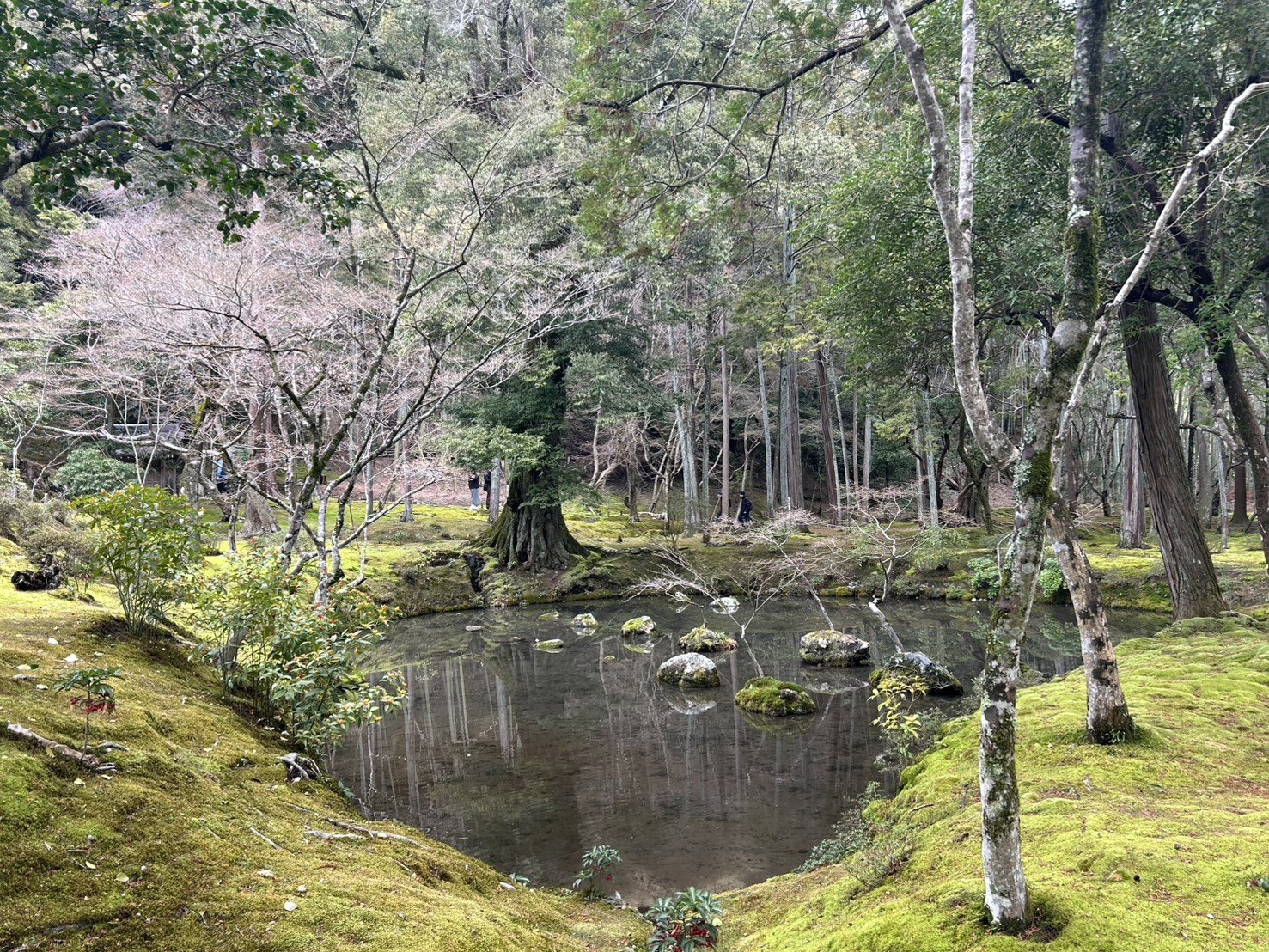
Saihoji is not quiet because little is there. It is quiet because its many elements coexist without crowding one another.
That is different from the usual shorthand of minimalism.
Beyond a Single View
Saihoji’s beauty cannot be reduced to one stone, one field of moss, or a single viewpoint that stands for the whole garden.
In an official Saihoji conversation, the speakers describe how a first visit can leave a person searching for the most beautiful view. After walking the garden repeatedly, however, the question begins to change. The point is no longer to find the single correct composition, but to notice what in the garden resonates with the visitor at that particular moment.2
Light, humidity, fallen leaves, and the pond change from day to day. The viewer changes as well. Age, mood, physical condition, and whatever occupies the mind can draw attention to different parts of the garden.
Walking the same path twice is therefore not quite the same experience twice.
Human care is everywhere in the garden. Trees are shaped, leaves are swept, ponds are tended, and moss is watched over across the seasons. Yet no single technique calls attention to itself; what registers first is the garden itself. Stones seem settled into place, the pond reflects the trees, and moss follows the contours of the ground.
Its completeness lies not in the absence of complexity, but in the ease with which its many elements coexist.
A Garden Still Being Made
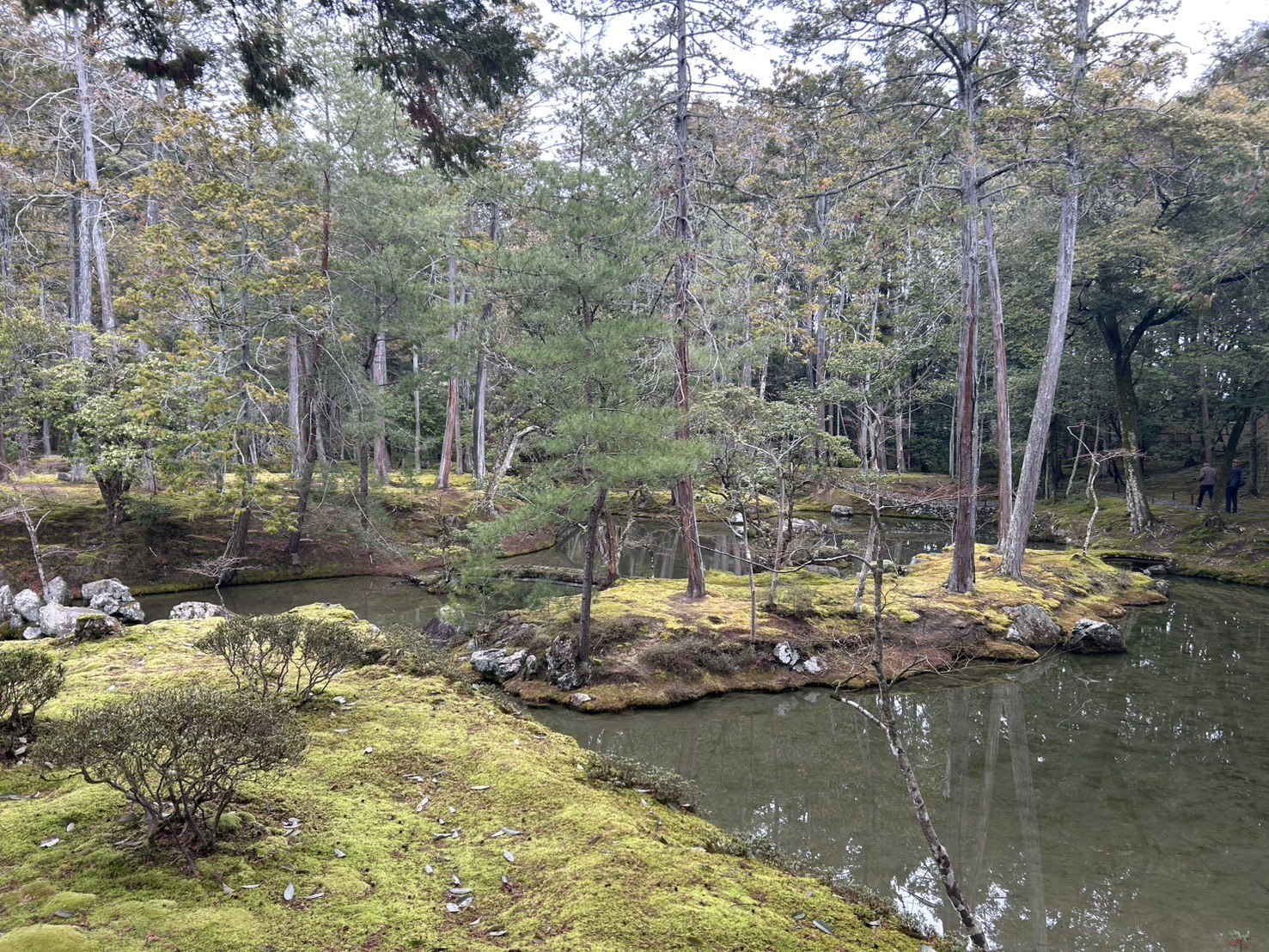
The Saihoji we see today was not completed on a single day and then preserved unchanged.
When the Zen priest and garden designer Muso Kokushi restored Saihoji in 1339, the garden included white sand, pond water, pavilions, and stone arrangements on the hillside. It did not yet resemble the deep green moss garden familiar today. War, fire, repeated floods, and periods of neglect later altered the temple grounds, while moss gradually spread over the course of centuries.34
The moss was not a surface laid across the garden at the beginning. What later generations inherited included both the original conception and changes that no designer had planned.
Over time, the moss-covered landscape itself became part of the inherited garden, cared for by later stewards.
Saihoji’s gardeners still observe light, moisture, fallen leaves, and the condition of the moss before deciding what work a particular day requires. Leaves left too long can block light and night dew; sweeping too forcefully can peel away the moss itself. Care does not mean fixing the garden at one perfect moment. It means reading change and helping different forms of life continue together.4
Saihoji’s coherence is not static perfection.
It comes from an original design, natural growth, historical disruption, accumulated time, and countless small acts of judgment. The garden is still being made.
Simplicity After Complexity
For Jobs, simplicity was not merely a clean surface.
He believed that encountering the best things people had made could shape what a person might later create. He wanted computers not merely to function, but to become worthy objects in everyday life. He argued that computers should be treated as designed objects, with industrial design, software, and human interaction considered together.5
At Apple, that work belonged to teams, not one person. A product can feel simple only after many problems have been worked through, edited, and integrated into a coherent experience.
Placed side by side, Saihoji and Jobs’s account of design illuminate a shared problem. Moss, water, stone, trees, sound, weather, natural growth, and sustained care all remain present in the garden. None has to disappear for the whole to feel calm and clear.
This is a comparison, not a claim of direct influence. The record does not show that Saihoji inspired a particular Apple product, or that this resemblance was the reason Jobs returned.
The garden may nevertheless have offered a demanding standard of coherence: a place where complexity did not need to look complicated.
But a design standard alone cannot fully explain why anyone returns to beauty.
Why Return to Beauty?
I came to understand one possible answer in a different place: the Hoshokan Museum at Byodoin in Uji.
The first time I entered its exhibition space, I stopped. Before I could think about dates, techniques, or religious meaning, one thought arrived:
How can anything be this beautiful?
Simply standing there brought a quiet joy that was difficult to explain. Beauty reached me before understanding did. It made me reluctant to leave and left me wanting to stand before it again.
That experience helped me understand why a person might return to a beautiful place without needing a practical reason. The stillness and pleasure of being there can be reason enough.
For some visitors, walking a garden like Saihoji can slow the pace of attention. Light, moss, water, sound, and the path underfoot come forward, while crowded thoughts may begin to settle.
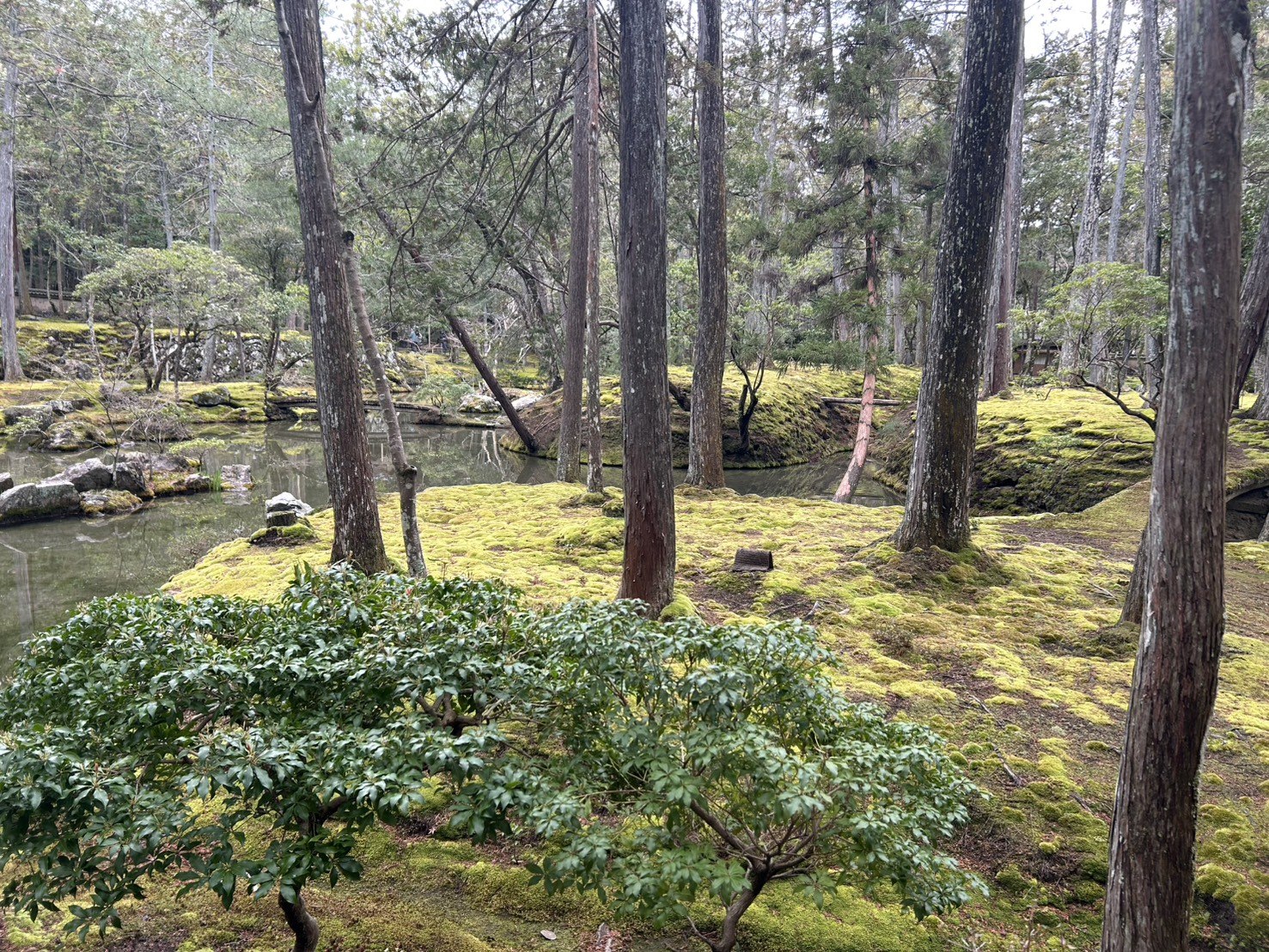
We cannot know whether Jobs experienced Saihoji in these terms. Yet the two possibilities need not exclude one another: a garden can sharpen a person’s sense of form while also offering the simple pleasure of being in the presence of beauty.
We know that Jobs returned. We do not know precisely what he found each time.
But a garden shaped by weather, care, time, and the changing attention of its visitor cannot be exhausted in a single view—or a single visit.
Sources and Notes
Public sources document Jobs’s interest in Zen, his admiration for gardens around Kyoto, and Saihoji’s retrospective acknowledgment that he visited often. They do not establish how many times he visited, what he felt there, or why he returned. The comparison with Apple, together with any proposed explanation for his returns, is this essay’s interpretation; no claim is made that Saihoji influenced a particular Apple product. All four Saihoji photographs are courtesy of Tang-Yu Life. For information on the museum discussed in the author’s account, see Byodoin’s official page for Hoshokan Museum.
- Walter Isaacson, Steve Jobs, Simon & Schuster, 2011, ch. 12, “The Design: Real Artists Simplify,” p. 128 in the first Simon & Schuster hardcover edition.
- Saihoji, “Crossroads of Saihoji (First Part): Mitachi Takashi & Fujita Ryuko”. The closing exchange retrospectively acknowledges that Jobs visited often. Elsewhere in the conversation, Mitachi and Fujita discuss how repeated walks change what a visitor notices; those observations are theirs, not attributed to Jobs.
- Saihoji, “A Guide to Saihoji”, “Walking in a World Heritage Garden”, “Savoring the Five Seasons”, and “The History of Saihoji”. On the upper and lower gardens, Golden Pond (Ogonchi), the earlier garden, more than 120 varieties of moss, and seasonal change.
- Saihoji, “The History of Saihoji” and “People Preserving Saihoji for Future Generations: Gardeners”. On war, fire, floods, the spread of moss, and the judgments involved in daily care.
- Steve Jobs Archive, “Objects of Our Life” and Make Something Wonderful, especially “Speech at the International Design Conference in Aspen (1983)” and “Interview with Michael Moritz (1984)”.