Garden・People・Stewardship
After a Garden Is Finished
Ryo Sugiyama and the work of keeping a garden alive
A garden does not end on the day it is finished.
Trees continue to grow, light shifts, and views that once felt carefully composed can slowly move out of balance.
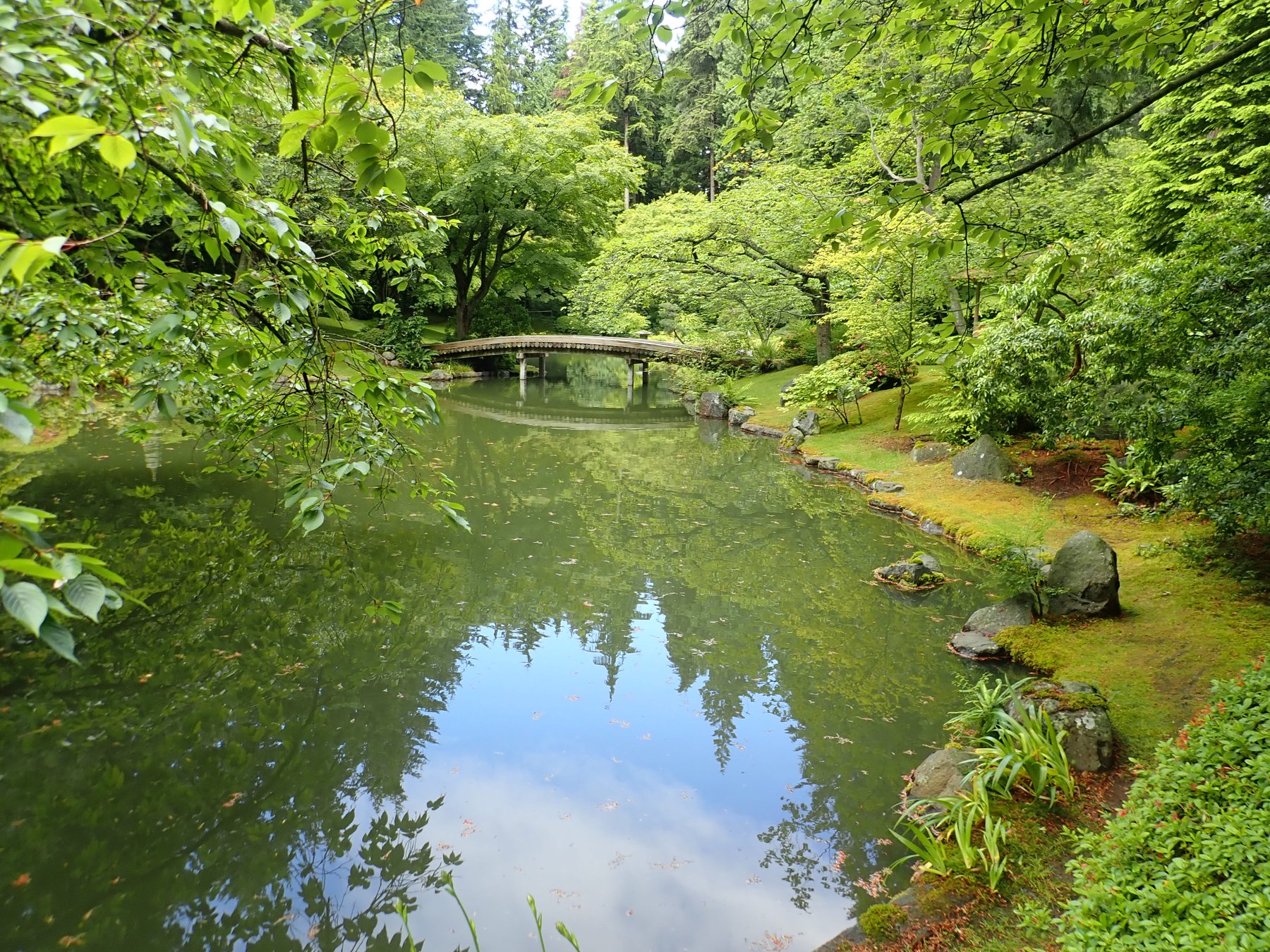
When I first met Ryo Sugiyama at UBC’s Nitobe Memorial Garden, he was pruning branches one by one, pausing before each cut. Only later did I understand that this was not simply maintenance. It was a form of long-term judgment: a way of reading the garden so that it can remain itself as it continues to change.
Contents
A Curator of a Living Work
Sugiyama studied horticulture at Chiba University and completed graduate work in environmental planning. After years of professional landscape work and a move to Canada, he became curator of Nitobe Memorial Garden in 2010.
In an interview with Chiba University, he described the garden curator as the person with overall professional responsibility for the garden. Which direction should it take? Which plants should be replaced? How should its care be organized? Each decision has to be made with the whole garden and its long-term future in mind.
The title curator is unusually precise.
A museum curator works with objects and collections. A garden curator is responsible for something that grows, ages, and responds to climate, disease, and human use. There is no single completed state that can simply be preserved.
When people think of caring for a garden, they often picture pruning, weeding, sweeping leaves, and cleaning ponds—the visible work of maintenance.
Sugiyama has used the word foster to describe this work. It suggests supporting the growth of something living. A garden is not an object that can be frozen at the moment of completion. Its original design has to be understood, then guided through changes in plants, climate, and time.
Yet Nitobe Memorial Garden is more than a living arrangement of plants. It is a cultural work shaped by history and meant to be passed from one generation to the next.
That larger responsibility is what I mean here by stewardship: one generation receives the garden for a time, cares for it, makes judgments on its behalf, and hands it on.
From Kannosuke Mori to Ryo Sugiyama
There is another connection that gives this idea a more personal shape.
Kannosuke Mori, the original designer of Nitobe Memorial Garden, came from the same horticultural and landscape tradition at Chiba. He studied and later taught at the institution that became Chiba University’s Faculty of Horticulture. Decades later, Sugiyama was educated in that same tradition.
Mori and Sugiyama were not directly teacher and student. But one of Sugiyama’s professors at Chiba had studied under Mori. In the lineage of landscape education, Sugiyama therefore stands one generation removed from the man who designed the garden.
Mori came to Vancouver in 1959 and spent fourteen months designing the garden and overseeing its construction. Half a century later, that teaching lineage returned to the garden through Sugiyama, who now has to decide how its plants should grow, which views should remain open, and how the garden should enter its next decades.
If foster describes the garden’s continuing growth, stewardship describes this longer arc of inheritance: one person designs; someone later learns to read the design; the work continues beyond both of them.
No one seems to have planned this succession. That is partly why it feels so fitting: it reflects the long span of time in which a garden truly exists.
Pruning a Tree, Preserving a Space
Plants do not stop growing when a garden opens.
Tree canopies thicken year by year, gradually closing a view that was once open toward the water. Branches extend over paths, changing the light and shade beneath them. As shrubs grow taller, stone arrangements recede into the foliage. When the edge of a pond loses its definition, the relationship between water, stone, and land begins to blur.
An individual tree can be perfectly healthy while the garden around it slowly loses its design.
Nitobe Memorial Garden is in Vancouver, where rainfall, pruning seasons, and plant growth differ from those in Japan. Sugiyama cannot simply repeat Japanese practice by rote. His aim is to create room for air, light, and movement while leaving the garden feeling as though it had grown naturally into its form.
That is one of the particular difficulties of pruning in a Japanese garden: trees shaped by human hands must still feel natural.
It is not enough to consider a tree in isolation. Its height, density, and branch direction have to be judged in relation to the entire garden.
Removing a single branch can change the light, reopen a distant view, or disturb the proportion between stones, water, and architecture. The branch kept or removed today will also influence the shape of the tree several years from now.
Sugiyama has told me that he teaches UBC students how to care for the garden and how to prune within the Japanese garden tradition.
A garden understood by only one person remains fragile.
Judgment cannot be preserved in a manual alone. It has to be taught and learned gradually through actual work—looking at trees, touching branches, and understanding why one is removed while another is left.
How Gardens Affect Us
In later correspondence, Sugiyama sent me a study that offered another way to understand these seemingly small decisions.
Co-authored by Sugiyama and other researchers, the study compared the responses of 57 Japanese and Canadian university students while they viewed three types of gardens in Vancouver: a landscape garden, a Japanese garden, and an architectural garden. The researchers measured eye movements, heart-rate variability, and participants’ impressions after viewing each space.
The Japanese garden prompted more visual fixations. The landscape garden produced higher parasympathetic activity and was more often perceived as close to nature. Cultural background also affected how participants looked at and responded to the gardens.
The point is not that one type of garden proved superior to the others.
The study suggests that spatial composition changes how the eye moves and may also elicit measurable physiological and emotional responses.
This made me think that the relationship between gardens and health may be more specific than the general idea that greenery makes people feel better. Different spatial arrangements may guide attention differently, and these patterns of looking may be part of how a garden becomes restorative.
Another study, published in 2025, compared Murin-an in Kyoto with a control garden at Kyoto University that contained similar visual elements but presented a less carefully structured and maintained setting.
At Murin-an, participants’ gaze ranged across a broader visual field and shifted more rapidly. Their pulse rates fell more, and their moods improved more clearly. The researchers argued that the overall composition and care of the garden—not any single tree, stone, or lantern—helped produce the response.
Original design and later care are difficult to separate because a visitor never encounters the original plan alone.
What the visitor sees is the garden that design, growth, and years of intervention have made together.
Design establishes the relationships among trees, water, stones, paths, and architecture. Maintenance determines whether those relationships remain legible years later.
If a garden can shape attention, emotion, and physiological response, then care preserves more than its appearance. It preserves the conditions that allow the space to keep having that effect.
Designing for a Garden Years Ahead
This also helps me understand more clearly why Chisao Shigemori, while designing a garden for us, repeatedly considered what each tree would become years later.
He considered not only the size of a tree when it was planted, but also its growth rate and the form it might eventually take before deciding on its species and position.
At the moment a garden is completed, many of its trees have not yet become what the design anticipates.
The designer has to imagine how, five or ten years later, each tree will relate to the architecture, stone arrangements, paths, and light.
Some gardens do not fully arrive at their intended form until years after they are finished.
The designer anticipates how plants will grow. The gardener responds once that growth actually occurs.
Maintenance is therefore not an afterthought to design. It is design continuing through time.
A Garden Also Needs Long-Term Commitment
Thinking about Sugiyama’s work and the history of Nitobe Memorial Garden brought another garden back to mind: Rikugien in Tokyo.
Rikugien is one of Tokyo’s most celebrated surviving daimyō gardens from the Edo period. Created for the feudal lord Yanagisawa Yoshiyasu beginning in 1695, it uses a pond, artificial hills, and a sequence of scenes shaped by classical poetry. Today it is designated a Special Place of Scenic Beauty by the Japanese government.
During my visit, the information displayed in the garden explained that Rikugien had fallen into neglect in the early Meiji period and was later restored by the Iwasaki family. At the time, I did not yet connect that history with the idea of stewardship. I simply remember thinking about the enormous labor and resources required to care for a garden of that scale.
Only later, while reflecting on Sugiyama’s work and Nitobe Memorial Garden, did that memory take on a different meaning. Rikugien’s restoration was not only a large undertaking. It was also an act of cultural stewardship carried across generations.
Yatarō Iwasaki, the founder of Mitsubishi, acquired the garden in 1878 and began its restoration. He revived the long-disused water supply and brought water back into the pond.
After his death, his brother Yanosuke and eldest son Hisaya continued the work. They transplanted tens of thousands of trees, brought garden stones from across Japan, and built several teahouses. In 1938, the Iwasaki family donated Rikugien to the City of Tokyo.
Rikugien did not survive simply because its original design was important. Several generations invested time, labor, knowledge, and resources in it.
Its history makes the point plainly: even a celebrated garden can fall into neglect when care stops. A garden remains because someone later agrees to take responsibility for it.
Rikugien shows that responsibility passing through several generations of a family. Bloedel Reserve on Bainbridge Island, near Seattle, shows how the same responsibility can be carried by an institution.
In 1970, Prentice and Virginia Bloedel gave their home and land to the University of Washington. Ownership later passed to the Arbor Fund, the nonprofit established to support its long-term care, and the Reserve opened to the public in 1988.
Walking through its forests, lawns, ponds, and designed gardens, it is easy to understand that caring for a place of this scale requires an institution—not merely a few people with pruning shears.
Bloedel Reserve has maintained records of its living collections since the 1970s. These records follow the history, origin, location, health, and movement of plants, allowing future caretakers to make decisions from knowledge accumulated over decades.
Most visitors will never see those records.
They, too, are part of stewardship.
Rikugien and Bloedel Reserve are far larger than residential gardens and cannot be compared directly with them. They simply enlarge the same truth until it becomes impossible to miss:
gardens do not preserve themselves.
Their continued existence requires trained people, sustained time, and institutions and resources capable of supporting both.
Someone Still Has to Know How to Read the Garden
When we enter a garden, we usually remember its designer. We remember the pond, trees, stones, and paths in front of us.
We rarely think about the person who, decades after the garden was completed, still watches how branches grow, how light changes, and what each cut may do to the composition.
The better this work is done, the less visible it becomes.
Visitors simply feel that the garden has always been this way. They do not see the years of observation and quiet judgment behind every scene that appears natural.
Sugiyama’s work is not merely to keep Nitobe Memorial Garden tidy.
He has to understand why Mori designed it as he did, decide how Japanese techniques should be adapted to Vancouver’s climate, teach students how to care for a Japanese garden, and use research to investigate how gardens affect the eye, body, and mind.
This work requires knowledge, patience, and responsibility over a long span of time.
It rarely stands in the spotlight. Yet it determines whether, decades from now, the garden will still possess its character.
References and Further Reading
The first meeting described in this essay, later correspondence—including Sugiyama’s use of the word foster—and Chisao Shigemori’s comments during the design of the author’s garden come from firsthand experience and direct communication. General sources are listed below.
-
Ryo Sugiyama’s education, the role of a garden curator, and his description of Kannosuke Mori as a senior predecessor at Chiba University.
Chiba University|Chibadai Press, No. 43 -
Kannosuke Mori’s education at Chiba Higher School of Horticulture and his later teaching career there.
Futaba Alumni Association, Faculty of Horticulture, Chiba University|About Futabakai -
The professor in Sugiyama’s Chiba education who had studied under Mori, and Sugiyama’s adaptation of Japanese pruning to Vancouver’s climate, including the creation of space for air and light.
UBC News|Nitobe Memorial Garden: A Garden That Bridges Worlds -
Kannosuke Mori’s design of Nitobe Memorial Garden and the garden’s historical background.
UBC Botanical Garden|Nitobe Memorial Garden -
The comparison of eye movement, heart-rate variability, and psychological responses among Japanese and Canadian students viewing different garden styles.
Urban Forestry & Urban Greening|Cross-Cultural Comparison of Physiological and Psychological Responses to Different Garden Styles -
The comparison of gaze, pulse rate, and emotional response at Murin-an and a control garden, and the role of overall composition and maintenance.
Frontiers in Neuroscience|Eye Movement Patterns Drive Stress Reduction During Japanese Garden Viewing -
Rikugien’s history, poetic design, status as a major Edo-period daimyō garden, and designation as a Special Place of Scenic Beauty.
Tokyo Metropolitan Park Association|Rikugien Gardens -
The Iwasaki family’s restoration of Rikugien, including the renewed water supply, transplantation of tens of thousands of trees, imported garden stones, teahouses, and the 1938 donation to the City of Tokyo.
Tokyo Metropolitan Government, Bureau of Construction|Conservation and Use Plan for Rikugien -
The transfer of Bloedel Reserve, the establishment of the Arbor Fund, and the institutional history of its long-term management.
University of Washington Libraries / Archives West|Arbor Fund Records -
Bloedel Reserve’s long-term documentation of the origin, location, health, and movement of its living collections.
Bloedel Reserve|Documenting the Collections